
Coach ASCHAFFENBURG - JASLO - find a connection and buy a ticket
ASCHAFFENBURG
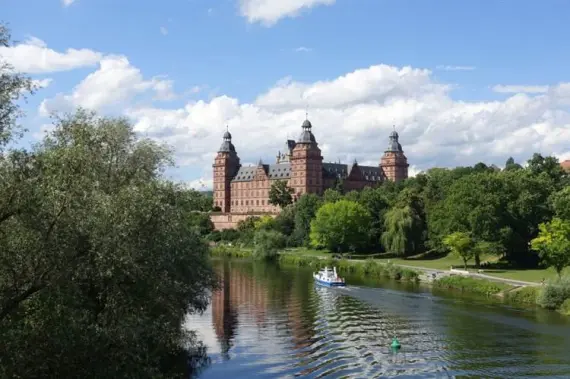
Aschaffenburg, known as the "Bavarian Nice," impresses with its atmosphere, cultural and architectural richness. At the heart of this city stands the majestic Johannisburg Castle, a Renaissance architectural gem, surrounded by enchanting gardens. This imposing structure, built of red sandstone, not only dominates the cityscape, but also offers rich art collections and historic interiors, including works by Lucas Cranach the Elder. The Pompejanum, on the other hand, transports visitors to ancient Rome, being a faithful replica of a Roman villa. These unique attractions make Aschaffenburg a place where history comes alive in every corner.
Teaterplatz is the cultural heart of the city, with an early 19th century city theater and one of the largest sundials in Europe. The square is not only a place to meet and relax, but also a starting point to further explore Aschaffenburg's cultural wealth, including the Stiftsmuseum with its collection of church art. As a result, Aschaffenburg offers a variety of cultural experiences, from theater to history and art, that attract culture lovers from around the world.
Buses to and from Aschaffenburg
Aschaffenburg is well connected to the rest of Germany and neighboring countries thanks to an extensive bus network. Buses to and from the city offer easy access to all its attractions, making it an attractive point on the tourist map. Travel comfort and direct connections to key cities ensure that visitors can enjoy Aschaffenburg's cultural and historical riches without undue hardship.
Aschaffenburg, known as the "Bavarian Nice," impresses with its atmosphere, cultural and architectural richness. At the heart of this city stands the majestic Johannisburg Castle, a Renaissance architectural gem, surrounded by enchanting gardens. This imposing structure, built of red sandstone, not only dominates the cityscape, but also offers rich art collections and historic interiors, including works by Lucas Cranach the Elder. The Pompejanum, on the other hand, transports visitors to ancient Rome, being a faithful replica of a Roman villa. These unique attractions make Aschaffenburg a place where history comes alive in every corner.
Teaterplatz is the cultural heart of the city, with an early 19th century city theater and one of the largest sundials in Europe. The square is not only a place to meet and relax, but also a starting point to further explore Aschaffenburg's cultural wealth, including the Stiftsmuseum with its collection of church art. As a result, Aschaffenburg offers a variety of cultural experiences, from theater to history and art, that attract culture lovers from around the world.
Buses to and from Aschaffenburg
Aschaffenburg is well connected to the rest of Germany and neighboring countries thanks to an extensive bus network. Buses to and from the city offer easy access to all its attractions, making it an attractive point on the tourist map. Travel comfort and direct connections to key cities ensure that visitors can enjoy Aschaffenburg's cultural and historical riches without undue hardship.
JASLO
Jaslo is a city of more than 35,000 people in southeastern Poland's Subcarpathian province. It is located at the foot of the Carpathian Mountains at the confluence of three rivers: the Wisłoka, Ropa and Jasiolka. It is an excellent starting point for trips to the Beskid Niski and Magurski National Park or the Ciężkowice foothills. Its picturesque location, proximity to unspoiled nooks and crannies, but also interesting history and a multitude of attractions attract more and more tourists.
Jaslo - attractions to see in the city
While in Jaslo, you must see the Collegiate Church of the Assumption of the Blessed Virgin Mary, famous for its medieval paintings, as well as the Sroczynski Palace with its surrounding park. Also worth a visit is the sanctuary of St. Anthony, Jaslo's patron saint, with a statue of St. Anthony that survived war damage and a baroque painting "Stigmatization of St. Francis" from the turn of the 17th and 18th centuries.
An interesting geological site within the city are the Jaslo rocks, which are exposed complexes of sandstone, shale and limestone with exposed fish impressions. In addition, a few kilometers from Jaslo is Karpacka Troja, an open-air archaeological museum presenting one of the oldest settlements in Poland, dating back to the Bronze Age.
It is impossible to get bored in Jaslo. The city is the capital of Subcarpathian geocaching, and also offers 6 different scenarios for an urban tourist game, allowing you to visit Jaslo in an active and unconventional way, and at the end discover its mystery or reach its treasure.
Jaslo - how to get there
Two national roads run through the city: 28 and 73, as well as provincial road 992. In Jaslo is located a railroad station, which is the main junction in the south of the Subcarpathian province. Right next to it is a bus station. You can find a list of available bus connections to and from Jaslo on our website. If you are planning to visit the picturesque and idyllic Subcarpathian region, bus Jaslo will be a great choice.
Jaslo is a city of more than 35,000 people in southeastern Poland's Subcarpathian province. It is located at the foot of the Carpathian Mountains at the confluence of three rivers: the Wisłoka, Ropa and Jasiolka. It is an excellent starting point for trips to the Beskid Niski and Magurski National Park or the Ciężkowice foothills. Its picturesque location, proximity to unspoiled nooks and crannies, but also interesting history and a multitude of attractions attract more and more tourists.
Jaslo - attractions to see in the city
While in Jaslo, you must see the Collegiate Church of the Assumption of the Blessed Virgin Mary, famous for its medieval paintings, as well as the Sroczynski Palace with its surrounding park. Also worth a visit is the sanctuary of St. Anthony, Jaslo's patron saint, with a statue of St. Anthony that survived war damage and a baroque painting "Stigmatization of St. Francis" from the turn of the 17th and 18th centuries.
An interesting geological site within the city are the Jaslo rocks, which are exposed complexes of sandstone, shale and limestone with exposed fish impressions. In addition, a few kilometers from Jaslo is Karpacka Troja, an open-air archaeological museum presenting one of the oldest settlements in Poland, dating back to the Bronze Age.
It is impossible to get bored in Jaslo. The city is the capital of Subcarpathian geocaching, and also offers 6 different scenarios for an urban tourist game, allowing you to visit Jaslo in an active and unconventional way, and at the end discover its mystery or reach its treasure.
Jaslo - how to get there
Two national roads run through the city: 28 and 73, as well as provincial road 992. In Jaslo is located a railroad station, which is the main junction in the south of the Subcarpathian province. Right next to it is a bus station. You can find a list of available bus connections to and from Jaslo on our website. If you are planning to visit the picturesque and idyllic Subcarpathian region, bus Jaslo will be a great choice.







© 2025 Sindbad
Technical support, assistance, payments: Sindbad IT
© 2025 Sindbad
Technical support, assistance, payments: Sindbad IT