
Bus from ASCHAFFENBURG to OSTROWIEC SWIETOKRZYSKI - find a connection and buy a ticket
ASCHAFFENBURG
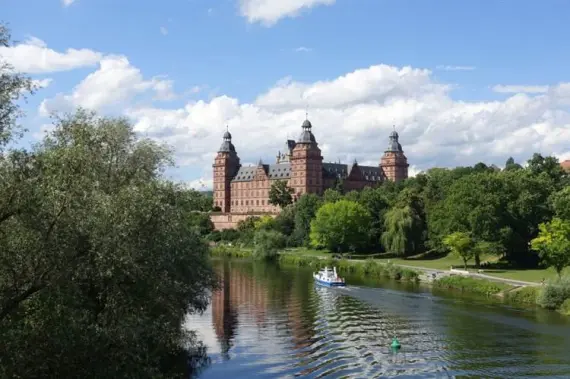
Aschaffenburg, known as the "Bavarian Nice," impresses with its atmosphere, cultural and architectural richness. At the heart of this city stands the majestic Johannisburg Castle, a Renaissance architectural gem, surrounded by enchanting gardens. This imposing structure, built of red sandstone, not only dominates the cityscape, but also offers rich art collections and historic interiors, including works by Lucas Cranach the Elder. The Pompejanum, on the other hand, transports visitors to ancient Rome, being a faithful replica of a Roman villa. These unique attractions make Aschaffenburg a place where history comes alive in every corner.
Teaterplatz is the cultural heart of the city, with an early 19th century city theater and one of the largest sundials in Europe. The square is not only a place to meet and relax, but also a starting point to further explore Aschaffenburg's cultural wealth, including the Stiftsmuseum with its collection of church art. As a result, Aschaffenburg offers a variety of cultural experiences, from theater to history and art, that attract culture lovers from around the world.
Buses to and from Aschaffenburg
Aschaffenburg is well connected to the rest of Germany and neighboring countries thanks to an extensive bus network. Buses to and from the city offer easy access to all its attractions, making it an attractive point on the tourist map. Travel comfort and direct connections to key cities ensure that visitors can enjoy Aschaffenburg's cultural and historical riches without undue hardship.
Aschaffenburg, known as the "Bavarian Nice," impresses with its atmosphere, cultural and architectural richness. At the heart of this city stands the majestic Johannisburg Castle, a Renaissance architectural gem, surrounded by enchanting gardens. This imposing structure, built of red sandstone, not only dominates the cityscape, but also offers rich art collections and historic interiors, including works by Lucas Cranach the Elder. The Pompejanum, on the other hand, transports visitors to ancient Rome, being a faithful replica of a Roman villa. These unique attractions make Aschaffenburg a place where history comes alive in every corner.
Teaterplatz is the cultural heart of the city, with an early 19th century city theater and one of the largest sundials in Europe. The square is not only a place to meet and relax, but also a starting point to further explore Aschaffenburg's cultural wealth, including the Stiftsmuseum with its collection of church art. As a result, Aschaffenburg offers a variety of cultural experiences, from theater to history and art, that attract culture lovers from around the world.
Buses to and from Aschaffenburg
Aschaffenburg is well connected to the rest of Germany and neighboring countries thanks to an extensive bus network. Buses to and from the city offer easy access to all its attractions, making it an attractive point on the tourist map. Travel comfort and direct connections to key cities ensure that visitors can enjoy Aschaffenburg's cultural and historical riches without undue hardship.
OSTROWIEC SWIETOKRZYSKI

Ostrowiec Swietokrzyski - by bus, train and coach
The city is not badly connected with other urban centers in the region and the country. The DK9 runs through the center of Ostrowiec, with which provincial roads 751, 755 and 754 converge. A glance at a map is enough to see that Ostrowiec Swietokrzyski is not far from larger towns: Kielce, Radom or even Lublin. The attractiveness of neighboring cities and areas, as well as a decently developed road network, makes it possible to conclude that coming by car to explore the city and its surroundings seems to be a good idea. However, not everyone can afford such comfort. What then? Public transportation within the city is provided by the city carrier (MZK) and a private company. The network of intercity bus services is well developed, and one of the main carriers is PKS Ostrowiec Świętokrzyski. It is complemented by rail transportation.
Ostrowiec Swietokrzyski is a stop on the route of coaches Sindbad. This allows you to reach many different locations on the Old Continent from here. From Ostrowiec, our buses run to France, Germany, Norway, Italy, Austria, Switzerland and the Netherlands, among others. We provide regular rides to many attractive cities in Europe, and the conditions on board our buses are truly European. Also tempting are the low ticket prices, which can confidently compete with the overall cost of airline tickets.
The bus stop is located at 40 Żabia Street - which is a convenient starting point for exploring the tourist attractions of Ostrowiec.
Ostrowiec Swietokrzyski - by bus, train and coach
The city is not badly connected with other urban centers in the region and the country. The DK9 runs through the center of Ostrowiec, with which provincial roads 751, 755 and 754 converge. A glance at a map is enough to see that Ostrowiec Swietokrzyski is not far from larger towns: Kielce, Radom or even Lublin. The attractiveness of neighboring cities and areas, as well as a decently developed road network, makes it possible to conclude that coming by car to explore the city and its surroundings seems to be a good idea. However, not everyone can afford such comfort. What then? Public transportation within the city is provided by the city carrier (MZK) and a private company. The network of intercity bus services is well developed, and one of the main carriers is PKS Ostrowiec Świętokrzyski. It is complemented by rail transportation.
Ostrowiec Swietokrzyski is a stop on the route of coaches Sindbad. This allows you to reach many different locations on the Old Continent from here. From Ostrowiec, our buses run to France, Germany, Norway, Italy, Austria, Switzerland and the Netherlands, among others. We provide regular rides to many attractive cities in Europe, and the conditions on board our buses are truly European. Also tempting are the low ticket prices, which can confidently compete with the overall cost of airline tickets.
The bus stop is located at 40 Żabia Street - which is a convenient starting point for exploring the tourist attractions of Ostrowiec.







© 2025 Sindbad
Technical support, assistance, payments: Sindbad IT
© 2025 Sindbad
Technical support, assistance, payments: Sindbad IT