
How to travel from ASCHAFFENBURG to WIELUN?
ASCHAFFENBURG
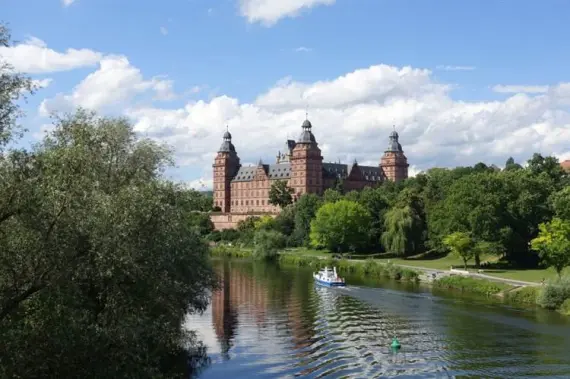
Aschaffenburg, known as the "Bavarian Nice," impresses with its atmosphere, cultural and architectural richness. At the heart of this city stands the majestic Johannisburg Castle, a Renaissance architectural gem, surrounded by enchanting gardens. This imposing structure, built of red sandstone, not only dominates the cityscape, but also offers rich art collections and historic interiors, including works by Lucas Cranach the Elder. The Pompejanum, on the other hand, transports visitors to ancient Rome, being a faithful replica of a Roman villa. These unique attractions make Aschaffenburg a place where history comes alive in every corner.
Teaterplatz is the cultural heart of the city, with an early 19th century city theater and one of the largest sundials in Europe. The square is not only a place to meet and relax, but also a starting point to further explore Aschaffenburg's cultural wealth, including the Stiftsmuseum with its collection of church art. As a result, Aschaffenburg offers a variety of cultural experiences, from theater to history and art, that attract culture lovers from around the world.
Buses to and from Aschaffenburg
Aschaffenburg is well connected to the rest of Germany and neighboring countries thanks to an extensive bus network. Buses to and from the city offer easy access to all its attractions, making it an attractive point on the tourist map. Travel comfort and direct connections to key cities ensure that visitors can enjoy Aschaffenburg's cultural and historical riches without undue hardship.
Aschaffenburg, known as the "Bavarian Nice," impresses with its atmosphere, cultural and architectural richness. At the heart of this city stands the majestic Johannisburg Castle, a Renaissance architectural gem, surrounded by enchanting gardens. This imposing structure, built of red sandstone, not only dominates the cityscape, but also offers rich art collections and historic interiors, including works by Lucas Cranach the Elder. The Pompejanum, on the other hand, transports visitors to ancient Rome, being a faithful replica of a Roman villa. These unique attractions make Aschaffenburg a place where history comes alive in every corner.
Teaterplatz is the cultural heart of the city, with an early 19th century city theater and one of the largest sundials in Europe. The square is not only a place to meet and relax, but also a starting point to further explore Aschaffenburg's cultural wealth, including the Stiftsmuseum with its collection of church art. As a result, Aschaffenburg offers a variety of cultural experiences, from theater to history and art, that attract culture lovers from around the world.
Buses to and from Aschaffenburg
Aschaffenburg is well connected to the rest of Germany and neighboring countries thanks to an extensive bus network. Buses to and from the city offer easy access to all its attractions, making it an attractive point on the tourist map. Travel comfort and direct connections to key cities ensure that visitors can enjoy Aschaffenburg's cultural and historical riches without undue hardship.
WIELUN

In Wieluń you will also find the Museum of Wieluń Land, but due to wartime damage, the city currently cannot boast an exaggerated tourist offer, at least not within the city itself. On the other hand, the areas adjacent to Wieluń are already a veritable trail of wooden architecture. It's quite funny that Casimir the Great surrounded Wieluń with walls, wanting to leave Poland walled, but forgot about the buildings outside the city. And maybe it's a good thing, because it's the monuments of the Wieluń area that are as unique as those in Malopolska.
Worth pointing out are the Wielun-style churches, the Manor House in Ozarow near Wieluń and the Museum of Manor Interiors.Restaurants in Wieluń - where to eat?
If you get hungry, Wieluń also has pretty good dining facilities. Many sources point to the excellence of local cafes and ice cream parlors. If you will be looking for something more persistent, restaurants located rather outside the center deserve attention.
The bus station in Wieluń
You can get to Wieluń by train or bus. The bus station in Wieluń is located northeast of the center, at 49 Staszica Street, right next to the Era Park Shopping Mall.
The city may not be rich enough in tourist attractions to spend more than a day or two there, but it's certainly worth stopping there if only for a moment to spice up a break in your tour.
In Wieluń you will also find the Museum of Wieluń Land, but due to wartime damage, the city currently cannot boast an exaggerated tourist offer, at least not within the city itself. On the other hand, the areas adjacent to Wieluń are already a veritable trail of wooden architecture. It's quite funny that Casimir the Great surrounded Wieluń with walls, wanting to leave Poland walled, but forgot about the buildings outside the city. And maybe it's a good thing, because it's the monuments of the Wieluń area that are as unique as those in Malopolska.
Worth pointing out are the Wielun-style churches, the Manor House in Ozarow near Wieluń and the Museum of Manor Interiors.Restaurants in Wieluń - where to eat?
If you get hungry, Wieluń also has pretty good dining facilities. Many sources point to the excellence of local cafes and ice cream parlors. If you will be looking for something more persistent, restaurants located rather outside the center deserve attention.
The bus station in Wieluń
You can get to Wieluń by train or bus. The bus station in Wieluń is located northeast of the center, at 49 Staszica Street, right next to the Era Park Shopping Mall.
The city may not be rich enough in tourist attractions to spend more than a day or two there, but it's certainly worth stopping there if only for a moment to spice up a break in your tour.







© 2025 Sindbad
Technical support, assistance, payments: Sindbad IT
© 2025 Sindbad
Technical support, assistance, payments: Sindbad IT