
Bus KARLSRUHE - VIENNA - Sindbad
KARLSRUHE
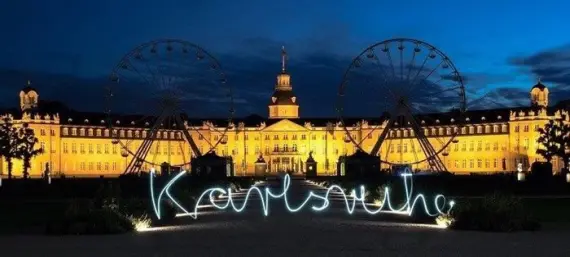
Karlsruhe is a city in Baden-Württemberg in southwestern Germany. It lies in the Upper Rhine Plain, on the Rhine, Alb and Pfinz rivers. It was founded in 1715 by the Margrave of Baden, Karl Wilhelm von Baden-Durlach. What undoubtedly distinguishes the city is its layout in the classic star-shaped layout. At the center is the palace, from which 32 avenues descend radially.
Already in the 19th century Karlsruhe was an important European scientific center. Research on electromagnetic waves was conducted there by Heinrich Hertz, and Karl Drais constructed the first bicycle in 1817. The city is home to Germany's oldest technical university.
What to see in Karlsruhe?
One of the most important sights in the city is the Renaissance palace located in the center. Its interiors now house the Baden State Museum with collections on the region and Karlsruhe itself. This castle is surrounded by an extensive park with a botanical garden and other thematic gardens, where you can have a nice rest amidst the greenery. Another museum worth visiting is the Staatliche Kunsthalle Karlsruhe, with a valuable collection of paintings by such famous artists as Rembrandt, Dürer and Cézanne, among others.
Getting there and transportation - Karlsruhe
The city is well connected - important highways such as the A5, A8 and A65 pass close by, and the French border is only about twenty kilometers away. Karlsruhe's location on the Rhine makes the city an important inland port, the fourth largest in Germany.
The city is also a major rail hub with a freight station where numerous lines converge, including those from Heidelberg to Basel and Mannheim to Rastatt. The Karlsruhe bus station is located near the city's main train station - Karlsruhe Hauptbahnhof on Schwarzwaldstrsse. Sindbad offers numerous buses to Karlsruhe - an affordable and environmentally friendly option for getting to this German city.
Karlsruhe is a city in Baden-Württemberg in southwestern Germany. It lies in the Upper Rhine Plain, on the Rhine, Alb and Pfinz rivers. It was founded in 1715 by the Margrave of Baden, Karl Wilhelm von Baden-Durlach. What undoubtedly distinguishes the city is its layout in the classic star-shaped layout. At the center is the palace, from which 32 avenues descend radially.
Already in the 19th century Karlsruhe was an important European scientific center. Research on electromagnetic waves was conducted there by Heinrich Hertz, and Karl Drais constructed the first bicycle in 1817. The city is home to Germany's oldest technical university.
What to see in Karlsruhe?
One of the most important sights in the city is the Renaissance palace located in the center. Its interiors now house the Baden State Museum with collections on the region and Karlsruhe itself. This castle is surrounded by an extensive park with a botanical garden and other thematic gardens, where you can have a nice rest amidst the greenery. Another museum worth visiting is the Staatliche Kunsthalle Karlsruhe, with a valuable collection of paintings by such famous artists as Rembrandt, Dürer and Cézanne, among others.
Getting there and transportation - Karlsruhe
The city is well connected - important highways such as the A5, A8 and A65 pass close by, and the French border is only about twenty kilometers away. Karlsruhe's location on the Rhine makes the city an important inland port, the fourth largest in Germany.
The city is also a major rail hub with a freight station where numerous lines converge, including those from Heidelberg to Basel and Mannheim to Rastatt. The Karlsruhe bus station is located near the city's main train station - Karlsruhe Hauptbahnhof on Schwarzwaldstrsse. Sindbad offers numerous buses to Karlsruhe - an affordable and environmentally friendly option for getting to this German city.
VIENNA
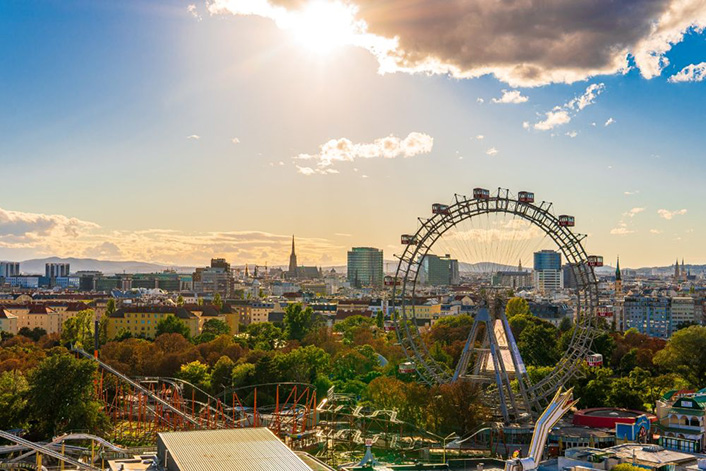
Vienna (German: Wien) is the capital of Austria and one of Europe's most important cities, both politically and culturally. Located on the Danube River, Vienna has a long history dating back to Roman times, when a military camp existed there. During the Middle Ages, the city became an important center in Central Europe, and after 1278 it became the capital of the Habsburg monarchy, which had a huge impact on its development and appearance.
Vienna is known for its impressive architecture, including Schönbrunn Palace, St. Stephen's Cathedral (Stephansdom), the Belvedere and many other monuments. The city is also known for its rich musical tradition, being home to composers such as Ludwig van Beethoven, Wolfgang Amadeus Mozart, Johann Strauss and Franz Schubert.
Viennese culture is closely associated with classical music, opera and ballet, and Vienna offers many concert halls and theaters, such as the famous Vienna Opera. In addition, Vienna has a thriving cultural scene, including numerous art galleries, museums (such as the Museum of Art History and the Albertina Museum) and festivals.
The city is also known for its high quality of life, beautiful parks such as the Prater, and traditional cafes that are an important part of Viennese culture, such as Cafe Central.
Vienna also serves as a political and economic and financial center, being home to many international organizations, including the United Nations (UN) and OPEC.
It is one of the most charming and influential cities in Europe, combining history with modernity to offer tourists countless attractions.
Vienna (German: Wien) is the capital of Austria and one of Europe's most important cities, both politically and culturally. Located on the Danube River, Vienna has a long history dating back to Roman times, when a military camp existed there. During the Middle Ages, the city became an important center in Central Europe, and after 1278 it became the capital of the Habsburg monarchy, which had a huge impact on its development and appearance.
Vienna is known for its impressive architecture, including Schönbrunn Palace, St. Stephen's Cathedral (Stephansdom), the Belvedere and many other monuments. The city is also known for its rich musical tradition, being home to composers such as Ludwig van Beethoven, Wolfgang Amadeus Mozart, Johann Strauss and Franz Schubert.
Viennese culture is closely associated with classical music, opera and ballet, and Vienna offers many concert halls and theaters, such as the famous Vienna Opera. In addition, Vienna has a thriving cultural scene, including numerous art galleries, museums (such as the Museum of Art History and the Albertina Museum) and festivals.
The city is also known for its high quality of life, beautiful parks such as the Prater, and traditional cafes that are an important part of Viennese culture, such as Cafe Central.
Vienna also serves as a political and economic and financial center, being home to many international organizations, including the United Nations (UN) and OPEC.
It is one of the most charming and influential cities in Europe, combining history with modernity to offer tourists countless attractions.







© 2026 Sindbad
Technical support, assistance, payments: Sindbad IT
© 2026 Sindbad
Technical support, assistance, payments: Sindbad IT