
Bus to ASCHAFFENBURG from PRUDNIK - timetable and current connections
PRUDNIK
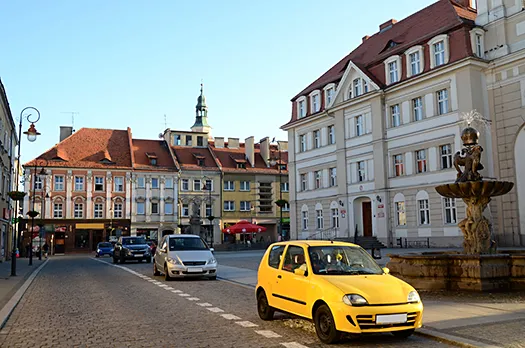
Prudnik is a small town in Opole province, historically part of Upper Silesia. The rivers Prudnik and Zloty Potok flow through it. It is only 5.5 kilometers from the Czech border.
This medieval town was granted city rights in 1279. The only monument, so to speak, remembering those times is the castle tower (Woka Tower), the oldest tower of its kind in Upper Silesia, from which one can admire the panorama of the city and its immediate surroundings.
Prudnik was not heavily damaged during World War II, so it reflects well the atmosphere of the historic city. Worth seeing is Prudnik's rectangular market square with colorful 18th- and 19th-century townhouses. In its central part is the town hall with a tall tower, and some of the older buildings in the city - the Marian column and the statue of St. John Nepomucen.
Around the city, due to the nearby location of the Opawskie Mountains, one can also find many walking and hiking trails, and in nearby Prudnik-Les there is a well-known Franciscan monastery along with the St. Joseph's sanctuary, where Cardinal Stefan Wyszynski was imprisoned in 1954.
Prudnik - how to get there
Prudnik is crisscrossed by national and provincial roads. The city is fairly well connected with its nearest neighbors and is located
on the route leading to the Trzebina-Vysoká border crossing with the Czech Republic.
The town also has a railway station and the Prudnik PKS bus station with frequent buses. Numerous connections to Polish and European cities depart from the bus station. If you have never been to Prudnik, but are planning a vacation in the Opawskie Mountains area, for example, visit this town as well - it will surely charm you.
Prudnik is a small town in Opole province, historically part of Upper Silesia. The rivers Prudnik and Zloty Potok flow through it. It is only 5.5 kilometers from the Czech border.
This medieval town was granted city rights in 1279. The only monument, so to speak, remembering those times is the castle tower (Woka Tower), the oldest tower of its kind in Upper Silesia, from which one can admire the panorama of the city and its immediate surroundings.
Prudnik was not heavily damaged during World War II, so it reflects well the atmosphere of the historic city. Worth seeing is Prudnik's rectangular market square with colorful 18th- and 19th-century townhouses. In its central part is the town hall with a tall tower, and some of the older buildings in the city - the Marian column and the statue of St. John Nepomucen.
Around the city, due to the nearby location of the Opawskie Mountains, one can also find many walking and hiking trails, and in nearby Prudnik-Les there is a well-known Franciscan monastery along with the St. Joseph's sanctuary, where Cardinal Stefan Wyszynski was imprisoned in 1954.
Prudnik - how to get there
Prudnik is crisscrossed by national and provincial roads. The city is fairly well connected with its nearest neighbors and is located
on the route leading to the Trzebina-Vysoká border crossing with the Czech Republic.
The town also has a railway station and the Prudnik PKS bus station with frequent buses. Numerous connections to Polish and European cities depart from the bus station. If you have never been to Prudnik, but are planning a vacation in the Opawskie Mountains area, for example, visit this town as well - it will surely charm you.
ASCHAFFENBURG
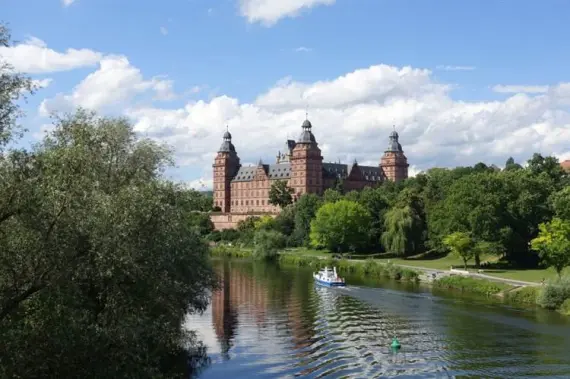
Aschaffenburg, known as the "Bavarian Nice," impresses with its atmosphere, cultural and architectural richness. At the heart of this city stands the majestic Johannisburg Castle, a Renaissance architectural gem, surrounded by enchanting gardens. This imposing structure, built of red sandstone, not only dominates the cityscape, but also offers rich art collections and historic interiors, including works by Lucas Cranach the Elder. The Pompejanum, on the other hand, transports visitors to ancient Rome, being a faithful replica of a Roman villa. These unique attractions make Aschaffenburg a place where history comes alive in every corner.
Teaterplatz is the cultural heart of the city, with an early 19th century city theater and one of the largest sundials in Europe. The square is not only a place to meet and relax, but also a starting point to further explore Aschaffenburg's cultural wealth, including the Stiftsmuseum with its collection of church art. As a result, Aschaffenburg offers a variety of cultural experiences, from theater to history and art, that attract culture lovers from around the world.
Buses to and from Aschaffenburg
Aschaffenburg is well connected to the rest of Germany and neighboring countries thanks to an extensive bus network. Buses to and from the city offer easy access to all its attractions, making it an attractive point on the tourist map. Travel comfort and direct connections to key cities ensure that visitors can enjoy Aschaffenburg's cultural and historical riches without undue hardship.
Aschaffenburg, known as the "Bavarian Nice," impresses with its atmosphere, cultural and architectural richness. At the heart of this city stands the majestic Johannisburg Castle, a Renaissance architectural gem, surrounded by enchanting gardens. This imposing structure, built of red sandstone, not only dominates the cityscape, but also offers rich art collections and historic interiors, including works by Lucas Cranach the Elder. The Pompejanum, on the other hand, transports visitors to ancient Rome, being a faithful replica of a Roman villa. These unique attractions make Aschaffenburg a place where history comes alive in every corner.
Teaterplatz is the cultural heart of the city, with an early 19th century city theater and one of the largest sundials in Europe. The square is not only a place to meet and relax, but also a starting point to further explore Aschaffenburg's cultural wealth, including the Stiftsmuseum with its collection of church art. As a result, Aschaffenburg offers a variety of cultural experiences, from theater to history and art, that attract culture lovers from around the world.
Buses to and from Aschaffenburg
Aschaffenburg is well connected to the rest of Germany and neighboring countries thanks to an extensive bus network. Buses to and from the city offer easy access to all its attractions, making it an attractive point on the tourist map. Travel comfort and direct connections to key cities ensure that visitors can enjoy Aschaffenburg's cultural and historical riches without undue hardship.







© 2025 Sindbad
Technical support, assistance, payments: Sindbad IT
© 2025 Sindbad
Technical support, assistance, payments: Sindbad IT