
Bus SALZBURG - LINZ - Sindbad
SALZBURG
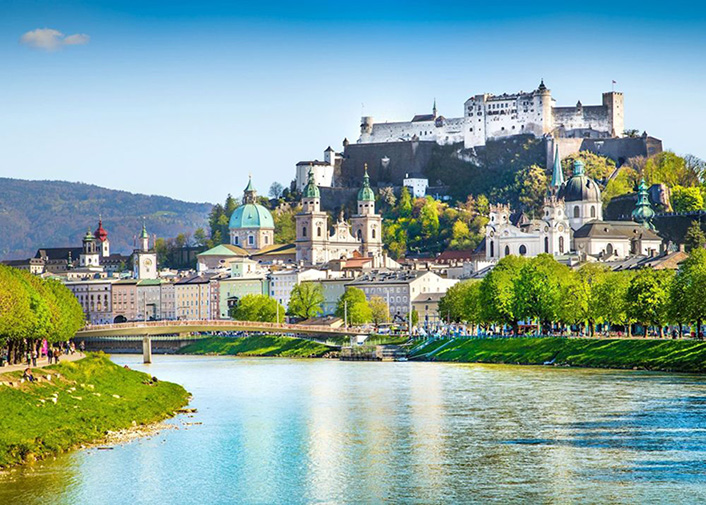
Salzburg is one of Austria's most beautiful cities, known for its unique architecture, beautiful landscapes and its role in the history of classical music. The city lies in the southwest of Austria, near the border with Germany, on the Salzach River.
Salzburg has a rich history, dating back to Roman times, but has become particularly famous as the birthplace of Wolfgang Amadeus Mozart (1756-1791), one of the greatest composers in the history of classical music. His family home, the Mozarthaus, is located in the city center and is a popular tourist spot.
Monuments:
Old Town (Altstadt): It has been designated a UNESCO World Heritage Site and is full of narrow streets, baroque buildings and charming squares.
Hohensalzburg Fortress: One of the best-preserved fortresses in Europe, offering stunning views of the city and surrounding mountains.
St. Rupert and Werner Cathedral (Salzburger Dom): An impressive Baroque cathedral that is one of the city's most important religious monuments.
Mirabell Palace and its gardens: A palace with beautiful gardens that became famous thanks to the movie "The Sound of Music" (The Sound of Music).
Salzburg is also known for the Salzburg Festival (Salzburger Festspiele), one of the most important music events in the world, held every summer. It's a festival dedicated to classical music, including operas, concerts and theatrical productions.
Salzburg is one of Austria's most beautiful cities, known for its unique architecture, beautiful landscapes and its role in the history of classical music. The city lies in the southwest of Austria, near the border with Germany, on the Salzach River.
Salzburg has a rich history, dating back to Roman times, but has become particularly famous as the birthplace of Wolfgang Amadeus Mozart (1756-1791), one of the greatest composers in the history of classical music. His family home, the Mozarthaus, is located in the city center and is a popular tourist spot.
Monuments:
Old Town (Altstadt): It has been designated a UNESCO World Heritage Site and is full of narrow streets, baroque buildings and charming squares.
Hohensalzburg Fortress: One of the best-preserved fortresses in Europe, offering stunning views of the city and surrounding mountains.
St. Rupert and Werner Cathedral (Salzburger Dom): An impressive Baroque cathedral that is one of the city's most important religious monuments.
Mirabell Palace and its gardens: A palace with beautiful gardens that became famous thanks to the movie "The Sound of Music" (The Sound of Music).
Salzburg is also known for the Salzburg Festival (Salzburger Festspiele), one of the most important music events in the world, held every summer. It's a festival dedicated to classical music, including operas, concerts and theatrical productions.
LINZ
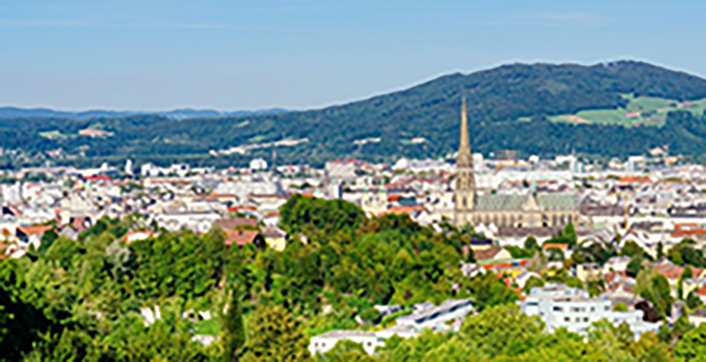
Linz is Austria's third-largest city, located on the Danube River in the western part of the country, in the Upper Austria region. The city combines modernity with a rich history, offering tourists many cultural, architectural and natural attractions.
Linz's strengths:
1. Culture and art:
a. Linz is the true cultural center of Austria. The city was the European Capital of Culture in 2009, which contributed to the dynamic development of the cultural sector. Linz is home to a number of museums and galleries, including the Lentos Kunstmuseum (a contemporary art museum), the Ars Electronica Center, which focuses on art and technology, and the Bruckner Museum, dedicated to composer Anton Bruckner, who was associated with the city.
2. Modern architecture:
a. Linz combines modern architecture with traditional buildings. Note the Ars Electronica Center, which is a symbol of modern Linz, and the Donauturm Tower, which offers a spectacular view of the city and the Danube River.
3. Monuments:
a. Linz also boasts historical attractions such as St. Mary's Cathedral (Mariendom), the largest church in Austria, the Old Market Square (Hauptplatz) with its picturesque townhouses, and Linz Castle, which offers a beautiful view of the city and the river.
4. Location on the Danube River:
a. The city is located on the Danube River, which is conducive to water tourism, walking along the river and exploring the scenic surroundings. There are also bicycle paths along the Danube to explore the region.
5. Transformation and innovation:
a. Linz is also known for innovation and technology. The city has a strong industrial tradition and is now betting on the development of the IT sector, start-ups and new technologies. The Ars Electronica Festival is one of the most important events in the world related to new media and digital art.
6. Events and festivals:
a. Linz hosts many art events and festivals throughout the year, such as the Ars Electronica Festival, Linz Fest and Pflasterspektakel, an international festival of street artists.
7. Good transport links:
a. Linz is well connected, both to other cities in Austria and to neighboring countries. The city has an international airport and convenient rail and road connections, making travel easy.
Linz is a place where tradition meets modernity, offering tourists a unique combination of culture, art, history and innovation.
Linz is Austria's third-largest city, located on the Danube River in the western part of the country, in the Upper Austria region. The city combines modernity with a rich history, offering tourists many cultural, architectural and natural attractions.
Linz's strengths:
1. Culture and art:
a. Linz is the true cultural center of Austria. The city was the European Capital of Culture in 2009, which contributed to the dynamic development of the cultural sector. Linz is home to a number of museums and galleries, including the Lentos Kunstmuseum (a contemporary art museum), the Ars Electronica Center, which focuses on art and technology, and the Bruckner Museum, dedicated to composer Anton Bruckner, who was associated with the city.
2. Modern architecture:
a. Linz combines modern architecture with traditional buildings. Note the Ars Electronica Center, which is a symbol of modern Linz, and the Donauturm Tower, which offers a spectacular view of the city and the Danube River.
3. Monuments:
a. Linz also boasts historical attractions such as St. Mary's Cathedral (Mariendom), the largest church in Austria, the Old Market Square (Hauptplatz) with its picturesque townhouses, and Linz Castle, which offers a beautiful view of the city and the river.
4. Location on the Danube River:
a. The city is located on the Danube River, which is conducive to water tourism, walking along the river and exploring the scenic surroundings. There are also bicycle paths along the Danube to explore the region.
5. Transformation and innovation:
a. Linz is also known for innovation and technology. The city has a strong industrial tradition and is now betting on the development of the IT sector, start-ups and new technologies. The Ars Electronica Festival is one of the most important events in the world related to new media and digital art.
6. Events and festivals:
a. Linz hosts many art events and festivals throughout the year, such as the Ars Electronica Festival, Linz Fest and Pflasterspektakel, an international festival of street artists.
7. Good transport links:
a. Linz is well connected, both to other cities in Austria and to neighboring countries. The city has an international airport and convenient rail and road connections, making travel easy.
Linz is a place where tradition meets modernity, offering tourists a unique combination of culture, art, history and innovation.







© 2026 Sindbad
Technical support, assistance, payments: Sindbad IT
© 2026 Sindbad
Technical support, assistance, payments: Sindbad IT