
Bus SALZBURG - VIENNA. Order a ticket
SALZBURG
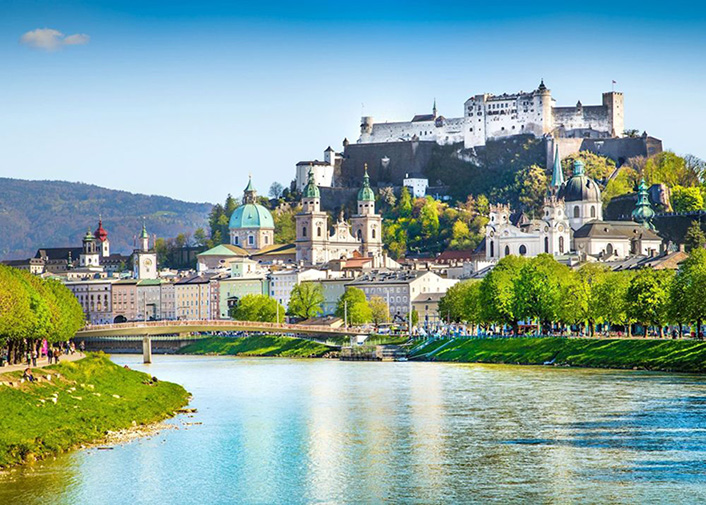
Salzburg is one of Austria's most beautiful cities, known for its unique architecture, beautiful landscapes and its role in the history of classical music. The city lies in the southwest of Austria, near the border with Germany, on the Salzach River.
Salzburg has a rich history, dating back to Roman times, but has become particularly famous as the birthplace of Wolfgang Amadeus Mozart (1756-1791), one of the greatest composers in the history of classical music. His family home, the Mozarthaus, is located in the city center and is a popular tourist spot.
Monuments:
Old Town (Altstadt): It has been designated a UNESCO World Heritage Site and is full of narrow streets, baroque buildings and charming squares.
Hohensalzburg Fortress: One of the best-preserved fortresses in Europe, offering stunning views of the city and surrounding mountains.
St. Rupert and Werner Cathedral (Salzburger Dom): An impressive Baroque cathedral that is one of the city's most important religious monuments.
Mirabell Palace and its gardens: A palace with beautiful gardens that became famous thanks to the movie "The Sound of Music" (The Sound of Music).
Salzburg is also known for the Salzburg Festival (Salzburger Festspiele), one of the most important music events in the world, held every summer. It's a festival dedicated to classical music, including operas, concerts and theatrical productions.
Salzburg is one of Austria's most beautiful cities, known for its unique architecture, beautiful landscapes and its role in the history of classical music. The city lies in the southwest of Austria, near the border with Germany, on the Salzach River.
Salzburg has a rich history, dating back to Roman times, but has become particularly famous as the birthplace of Wolfgang Amadeus Mozart (1756-1791), one of the greatest composers in the history of classical music. His family home, the Mozarthaus, is located in the city center and is a popular tourist spot.
Monuments:
Old Town (Altstadt): It has been designated a UNESCO World Heritage Site and is full of narrow streets, baroque buildings and charming squares.
Hohensalzburg Fortress: One of the best-preserved fortresses in Europe, offering stunning views of the city and surrounding mountains.
St. Rupert and Werner Cathedral (Salzburger Dom): An impressive Baroque cathedral that is one of the city's most important religious monuments.
Mirabell Palace and its gardens: A palace with beautiful gardens that became famous thanks to the movie "The Sound of Music" (The Sound of Music).
Salzburg is also known for the Salzburg Festival (Salzburger Festspiele), one of the most important music events in the world, held every summer. It's a festival dedicated to classical music, including operas, concerts and theatrical productions.
VIENNA
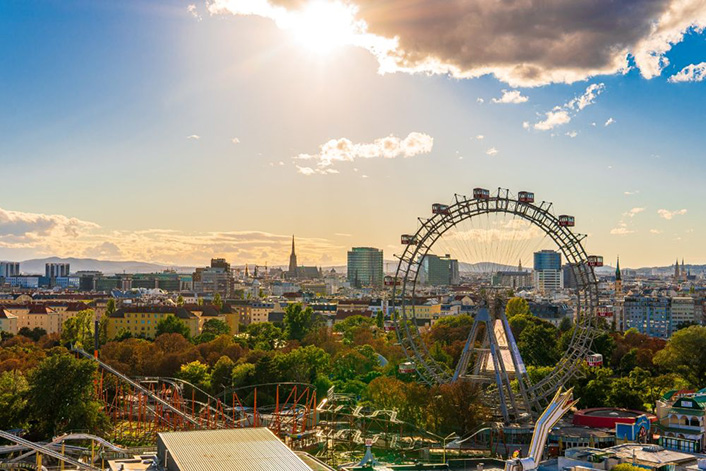
Vienna (German: Wien) is the capital of Austria and one of Europe's most important cities, both politically and culturally. Located on the Danube River, Vienna has a long history dating back to Roman times, when a military camp existed there. During the Middle Ages, the city became an important center in Central Europe, and after 1278 it became the capital of the Habsburg monarchy, which had a huge impact on its development and appearance.
Vienna is known for its impressive architecture, including Schönbrunn Palace, St. Stephen's Cathedral (Stephansdom), the Belvedere and many other monuments. The city is also known for its rich musical tradition, being home to composers such as Ludwig van Beethoven, Wolfgang Amadeus Mozart, Johann Strauss and Franz Schubert.
Viennese culture is closely associated with classical music, opera and ballet, and Vienna offers many concert halls and theaters, such as the famous Vienna Opera. In addition, Vienna has a thriving cultural scene, including numerous art galleries, museums (such as the Museum of Art History and the Albertina Museum) and festivals.
The city is also known for its high quality of life, beautiful parks such as the Prater, and traditional cafes that are an important part of Viennese culture, such as Cafe Central.
Vienna also serves as a political and economic and financial center, being home to many international organizations, including the United Nations (UN) and OPEC.
It is one of the most charming and influential cities in Europe, combining history with modernity to offer tourists countless attractions.
Vienna (German: Wien) is the capital of Austria and one of Europe's most important cities, both politically and culturally. Located on the Danube River, Vienna has a long history dating back to Roman times, when a military camp existed there. During the Middle Ages, the city became an important center in Central Europe, and after 1278 it became the capital of the Habsburg monarchy, which had a huge impact on its development and appearance.
Vienna is known for its impressive architecture, including Schönbrunn Palace, St. Stephen's Cathedral (Stephansdom), the Belvedere and many other monuments. The city is also known for its rich musical tradition, being home to composers such as Ludwig van Beethoven, Wolfgang Amadeus Mozart, Johann Strauss and Franz Schubert.
Viennese culture is closely associated with classical music, opera and ballet, and Vienna offers many concert halls and theaters, such as the famous Vienna Opera. In addition, Vienna has a thriving cultural scene, including numerous art galleries, museums (such as the Museum of Art History and the Albertina Museum) and festivals.
The city is also known for its high quality of life, beautiful parks such as the Prater, and traditional cafes that are an important part of Viennese culture, such as Cafe Central.
Vienna also serves as a political and economic and financial center, being home to many international organizations, including the United Nations (UN) and OPEC.
It is one of the most charming and influential cities in Europe, combining history with modernity to offer tourists countless attractions.







© 2026 Sindbad
Technical support, assistance, payments: Sindbad IT
© 2026 Sindbad
Technical support, assistance, payments: Sindbad IT