
How to travel from VIENNA to BRATISLAVA?
VIENNA
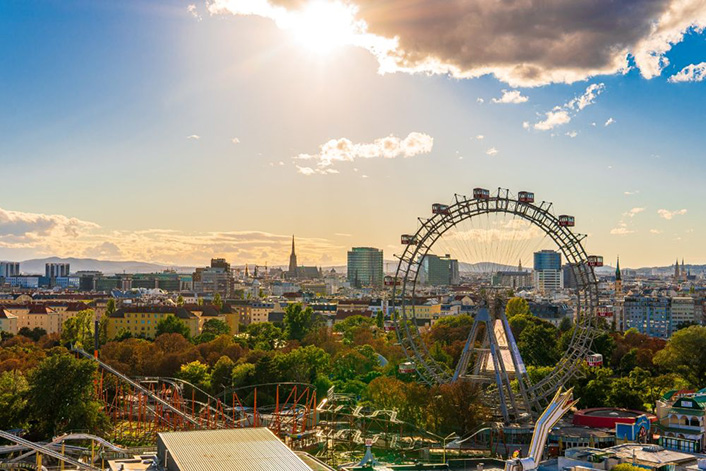
Vienna (German: Wien) is the capital of Austria and one of Europe's most important cities, both politically and culturally. Located on the Danube River, Vienna has a long history dating back to Roman times, when a military camp existed there. During the Middle Ages, the city became an important center in Central Europe, and after 1278 it became the capital of the Habsburg monarchy, which had a huge impact on its development and appearance.
Vienna is known for its impressive architecture, including Schönbrunn Palace, St. Stephen's Cathedral (Stephansdom), the Belvedere and many other monuments. The city is also known for its rich musical tradition, being home to composers such as Ludwig van Beethoven, Wolfgang Amadeus Mozart, Johann Strauss and Franz Schubert.
Viennese culture is closely associated with classical music, opera and ballet, and Vienna offers many concert halls and theaters, such as the famous Vienna Opera. In addition, Vienna has a thriving cultural scene, including numerous art galleries, museums (such as the Museum of Art History and the Albertina Museum) and festivals.
The city is also known for its high quality of life, beautiful parks such as the Prater, and traditional cafes that are an important part of Viennese culture, such as Cafe Central.
Vienna also serves as a political and economic and financial center, being home to many international organizations, including the United Nations (UN) and OPEC.
It is one of the most charming and influential cities in Europe, combining history with modernity to offer tourists countless attractions.
Vienna (German: Wien) is the capital of Austria and one of Europe's most important cities, both politically and culturally. Located on the Danube River, Vienna has a long history dating back to Roman times, when a military camp existed there. During the Middle Ages, the city became an important center in Central Europe, and after 1278 it became the capital of the Habsburg monarchy, which had a huge impact on its development and appearance.
Vienna is known for its impressive architecture, including Schönbrunn Palace, St. Stephen's Cathedral (Stephansdom), the Belvedere and many other monuments. The city is also known for its rich musical tradition, being home to composers such as Ludwig van Beethoven, Wolfgang Amadeus Mozart, Johann Strauss and Franz Schubert.
Viennese culture is closely associated with classical music, opera and ballet, and Vienna offers many concert halls and theaters, such as the famous Vienna Opera. In addition, Vienna has a thriving cultural scene, including numerous art galleries, museums (such as the Museum of Art History and the Albertina Museum) and festivals.
The city is also known for its high quality of life, beautiful parks such as the Prater, and traditional cafes that are an important part of Viennese culture, such as Cafe Central.
Vienna also serves as a political and economic and financial center, being home to many international organizations, including the United Nations (UN) and OPEC.
It is one of the most charming and influential cities in Europe, combining history with modernity to offer tourists countless attractions.
BRATISLAVA
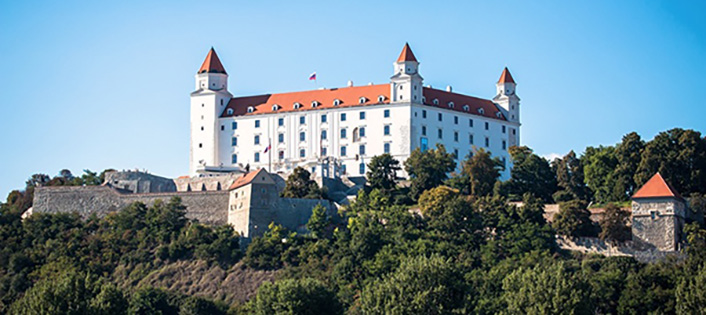
Bratislava is the capital and largest city of Slovakia, located on the Danube River, close to the borders with Austria and Hungary. It is an important cultural, scientific and industrial center of the country. Bratislava offers many tourist attractions, including monuments, parks, museums and other places of interest.
Monuments and attractions in Bratislava:
1. Bratislava Castle (Bratislavský hrad) - One of the city's most important symbols, the castle sits on a hill overlooking the Danube River. The castle has a rich history dating back to Celtic and Roman times.
2. St. Martin's Cathedral (Dóm svätého Martina) - A Gothic cathedral that was the site of the coronation of Hungarian kings. It is located in the center of the old town.
3. Primaciálny palace (Primaciálny palác) - A beautiful palace from the 18th century, now the seat of the mayor of Bratislava. The palace houses a collection of tapestries and a hall of mirrors.
4. Old Town (Staré Mesto) - The historic center of Bratislava, with narrow streets, historic buildings, churches and cafes.
5. Museum of Natural History (Prírodovedné múzeum) - Museum offering exhibitions on nature, geology and paleontology of Slovakia
Parks and green spaces:
1. Sad Janka Kráľa - One of the oldest public parks in Central Europe, located on the right bank of the Danube. An ideal place for a walk and relaxation.
2. Horský park - A park located in the hills above the city, offering beautiful views and numerous walking paths.
3. Green oasis by the Danube - A recreational area along the Danube, with bicycle trails, playgrounds and picnic areas.
Museums and galleries:
1. Slovak National Museum (Slovenské národné múzeum) - The largest museum in Slovakia, with extensive historical and ethnographic collections.
2. National Gallery of Slovakia (Slovenská národná galéria) - An art gallery with a collection of works by Slovak and foreign artists.
3. Chatam Sofer Memorial Museum (Múzeum Chatam Sofer) - A museum dedicated to the memory of Rabbi Chatam Sofer and Jewish history in Bratislava.
Bratislava is a city rich in history and culture that offers numerous tourist attractions and leisure activities.
Bratislava is the capital and largest city of Slovakia, located on the Danube River, close to the borders with Austria and Hungary. It is an important cultural, scientific and industrial center of the country. Bratislava offers many tourist attractions, including monuments, parks, museums and other places of interest.
Monuments and attractions in Bratislava:
1. Bratislava Castle (Bratislavský hrad) - One of the city's most important symbols, the castle sits on a hill overlooking the Danube River. The castle has a rich history dating back to Celtic and Roman times.
2. St. Martin's Cathedral (Dóm svätého Martina) - A Gothic cathedral that was the site of the coronation of Hungarian kings. It is located in the center of the old town.
3. Primaciálny palace (Primaciálny palác) - A beautiful palace from the 18th century, now the seat of the mayor of Bratislava. The palace houses a collection of tapestries and a hall of mirrors.
4. Old Town (Staré Mesto) - The historic center of Bratislava, with narrow streets, historic buildings, churches and cafes.
5. Museum of Natural History (Prírodovedné múzeum) - Museum offering exhibitions on nature, geology and paleontology of Slovakia
Parks and green spaces:
1. Sad Janka Kráľa - One of the oldest public parks in Central Europe, located on the right bank of the Danube. An ideal place for a walk and relaxation.
2. Horský park - A park located in the hills above the city, offering beautiful views and numerous walking paths.
3. Green oasis by the Danube - A recreational area along the Danube, with bicycle trails, playgrounds and picnic areas.
Museums and galleries:
1. Slovak National Museum (Slovenské národné múzeum) - The largest museum in Slovakia, with extensive historical and ethnographic collections.
2. National Gallery of Slovakia (Slovenská národná galéria) - An art gallery with a collection of works by Slovak and foreign artists.
3. Chatam Sofer Memorial Museum (Múzeum Chatam Sofer) - A museum dedicated to the memory of Rabbi Chatam Sofer and Jewish history in Bratislava.
Bratislava is a city rich in history and culture that offers numerous tourist attractions and leisure activities.







© 2026 Sindbad
Technical support, assistance, payments: Sindbad IT
© 2026 Sindbad
Technical support, assistance, payments: Sindbad IT