
How to travel from FULDA to KROTOSZYN?
FULDA
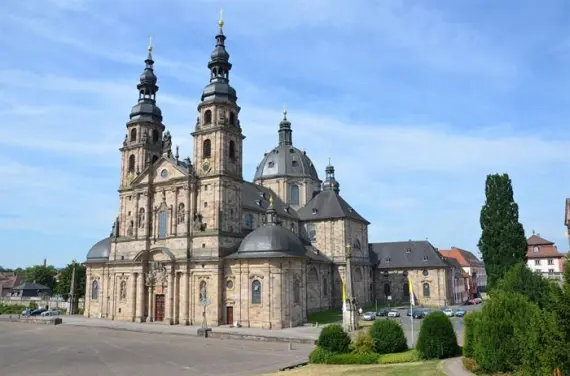
Fulda is located in the heart of Germany, in the state of Hesse on the river of the same name. It is a picturesque city with many baroque buildings, gardens and green spaces. Is it worth going here and what can you see?
Despite its overlooking Baroque setting, Fulda is actually a city with more than 1000 years of history. A Benedictine monastery was founded here as early as 744, and thanks to the learned monk Count Maur, the city became a major scientific center of the Frankish Empire. Fulda's Baroque appearance is mainly due to Abbot Adalbert von Schleifras, who was responsible for the construction of the city palace and the cathedral. Both buildings are on the first list of objects to see in the city. In addition to them, St. Michael's Church - one of the oldest in Germany, as evidenced by its well-preserved crypt dating back to the 9th century - is worth a visit. In the city center, noteworthy is the half-timbered old town hall with its arcades, as well as many cobblestone townhouses and buildings. Fulda has several parks, of which the Baroque garden by the city palace with its pond, numerous fountains and sculptures is particularly noteworthy.
Getting to Fulda
Fulda is an important road junction and is located on the A7 Ulm-Hanower and A66 Frankfurt-Fulda highways. About 100 kilometers from Fulda lies Frankfurt am Main. From there, Fulda can be reached by direct train in about an hour and a half. The main train station in the city is located in the center, right next to the City Palace. The Fulda bus station is also located there and our long-distance coaches stop there. We will be a good choice if you are interested in buses to Germany. Fulda, on the other hand, is a city that will appeal to lovers of Baroque architecture, but also those looking for an atmospheric small city for a weekend city break.
Fulda is located in the heart of Germany, in the state of Hesse on the river of the same name. It is a picturesque city with many baroque buildings, gardens and green spaces. Is it worth going here and what can you see?
Despite its overlooking Baroque setting, Fulda is actually a city with more than 1000 years of history. A Benedictine monastery was founded here as early as 744, and thanks to the learned monk Count Maur, the city became a major scientific center of the Frankish Empire. Fulda's Baroque appearance is mainly due to Abbot Adalbert von Schleifras, who was responsible for the construction of the city palace and the cathedral. Both buildings are on the first list of objects to see in the city. In addition to them, St. Michael's Church - one of the oldest in Germany, as evidenced by its well-preserved crypt dating back to the 9th century - is worth a visit. In the city center, noteworthy is the half-timbered old town hall with its arcades, as well as many cobblestone townhouses and buildings. Fulda has several parks, of which the Baroque garden by the city palace with its pond, numerous fountains and sculptures is particularly noteworthy.
Getting to Fulda
Fulda is an important road junction and is located on the A7 Ulm-Hanower and A66 Frankfurt-Fulda highways. About 100 kilometers from Fulda lies Frankfurt am Main. From there, Fulda can be reached by direct train in about an hour and a half. The main train station in the city is located in the center, right next to the City Palace. The Fulda bus station is also located there and our long-distance coaches stop there. We will be a good choice if you are interested in buses to Germany. Fulda, on the other hand, is a city that will appeal to lovers of Baroque architecture, but also those looking for an atmospheric small city for a weekend city break.
KROTOSZYN
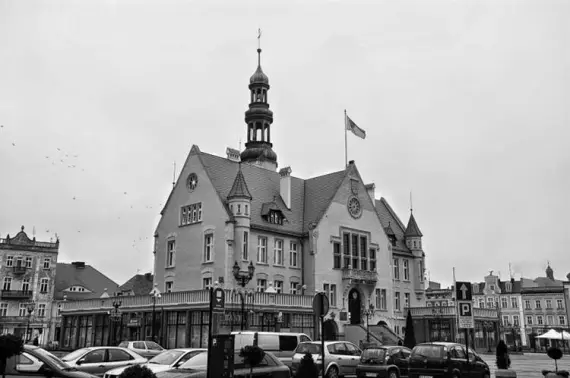
Krotoszyn is a town of nearly 29,000 people located in Greater Poland province on the Kaliska Plateau. It is located between Wrocław and Poznań, near Ostrów Wielkopolski, and is more than 600 years old. It was then that Krotoszyn was located under the Magdeburg Law thanks to King Wladyslaw Jagiello. It owes its name to the Krotowski family, who owned the city area in the 15th century.
Over the centuries Krotoszyn was repeatedly destroyed by various invasions or fires, but was rebuilt quite quickly, so that it did not lose too much of its importance and historical urban layout. In recent centuries, crafts (mainly shoemaking and tanning) and agriculture developed rapidly there.
While in Krotoszyn, it's worth seeing the market square with its historic townhouses and town hall from the late 17th century, as well as numerous churches, especially wooden ones - the church of St. Mary Magdalene from 1755 or St. Fabian and St. Sebastian from 1572, which looks like an Orthodox church. The city also has a charming park named after the Polish Army with a long history. In addition, it is surrounded by numerous forest complexes called Dąbrowa Krotoszynskie, where several scenic biking and hiking trails have been laid out.
Getting there - Krotoszyn
Krotoszyn is well connected with the rest of the country. National and provincial roads run through it. There is a train station and a bus station with daily connections to major cities and neighboring towns in Greater Poland. From the PKS Krotoszyn station you can also go to many European cities, mainly located in Germany, France, England or Italy.
Krotoszyn is a town of nearly 29,000 people located in Greater Poland province on the Kaliska Plateau. It is located between Wrocław and Poznań, near Ostrów Wielkopolski, and is more than 600 years old. It was then that Krotoszyn was located under the Magdeburg Law thanks to King Wladyslaw Jagiello. It owes its name to the Krotowski family, who owned the city area in the 15th century.
Over the centuries Krotoszyn was repeatedly destroyed by various invasions or fires, but was rebuilt quite quickly, so that it did not lose too much of its importance and historical urban layout. In recent centuries, crafts (mainly shoemaking and tanning) and agriculture developed rapidly there.
While in Krotoszyn, it's worth seeing the market square with its historic townhouses and town hall from the late 17th century, as well as numerous churches, especially wooden ones - the church of St. Mary Magdalene from 1755 or St. Fabian and St. Sebastian from 1572, which looks like an Orthodox church. The city also has a charming park named after the Polish Army with a long history. In addition, it is surrounded by numerous forest complexes called Dąbrowa Krotoszynskie, where several scenic biking and hiking trails have been laid out.
Getting there - Krotoszyn
Krotoszyn is well connected with the rest of the country. National and provincial roads run through it. There is a train station and a bus station with daily connections to major cities and neighboring towns in Greater Poland. From the PKS Krotoszyn station you can also go to many European cities, mainly located in Germany, France, England or Italy.







© 2026 Sindbad
Technical support, assistance, payments: Sindbad IT
© 2026 Sindbad
Technical support, assistance, payments: Sindbad IT