
Bus from KROTOSZYN to BREMEN. Current connections
KROTOSZYN
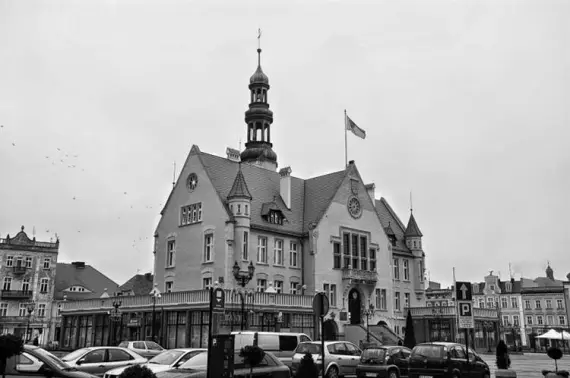
Krotoszyn is a town of nearly 29,000 people located in Greater Poland province on the Kaliska Plateau. It is located between Wrocław and Poznań, near Ostrów Wielkopolski, and is more than 600 years old. It was then that Krotoszyn was located under the Magdeburg Law thanks to King Wladyslaw Jagiello. It owes its name to the Krotowski family, who owned the city area in the 15th century.
Over the centuries Krotoszyn was repeatedly destroyed by various invasions or fires, but was rebuilt quite quickly, so that it did not lose too much of its importance and historical urban layout. In recent centuries, crafts (mainly shoemaking and tanning) and agriculture developed rapidly there.
While in Krotoszyn, it's worth seeing the market square with its historic townhouses and town hall from the late 17th century, as well as numerous churches, especially wooden ones - the church of St. Mary Magdalene from 1755 or St. Fabian and St. Sebastian from 1572, which looks like an Orthodox church. The city also has a charming park named after the Polish Army with a long history. In addition, it is surrounded by numerous forest complexes called Dąbrowa Krotoszynskie, where several scenic biking and hiking trails have been laid out.
Getting there - Krotoszyn
Krotoszyn is well connected with the rest of the country. National and provincial roads run through it. There is a train station and a bus station with daily connections to major cities and neighboring towns in Greater Poland. From the PKS Krotoszyn station you can also go to many European cities, mainly located in Germany, France, England or Italy.
Krotoszyn is a town of nearly 29,000 people located in Greater Poland province on the Kaliska Plateau. It is located between Wrocław and Poznań, near Ostrów Wielkopolski, and is more than 600 years old. It was then that Krotoszyn was located under the Magdeburg Law thanks to King Wladyslaw Jagiello. It owes its name to the Krotowski family, who owned the city area in the 15th century.
Over the centuries Krotoszyn was repeatedly destroyed by various invasions or fires, but was rebuilt quite quickly, so that it did not lose too much of its importance and historical urban layout. In recent centuries, crafts (mainly shoemaking and tanning) and agriculture developed rapidly there.
While in Krotoszyn, it's worth seeing the market square with its historic townhouses and town hall from the late 17th century, as well as numerous churches, especially wooden ones - the church of St. Mary Magdalene from 1755 or St. Fabian and St. Sebastian from 1572, which looks like an Orthodox church. The city also has a charming park named after the Polish Army with a long history. In addition, it is surrounded by numerous forest complexes called Dąbrowa Krotoszynskie, where several scenic biking and hiking trails have been laid out.
Getting there - Krotoszyn
Krotoszyn is well connected with the rest of the country. National and provincial roads run through it. There is a train station and a bus station with daily connections to major cities and neighboring towns in Greater Poland. From the PKS Krotoszyn station you can also go to many European cities, mainly located in Germany, France, England or Italy.
BREMEN
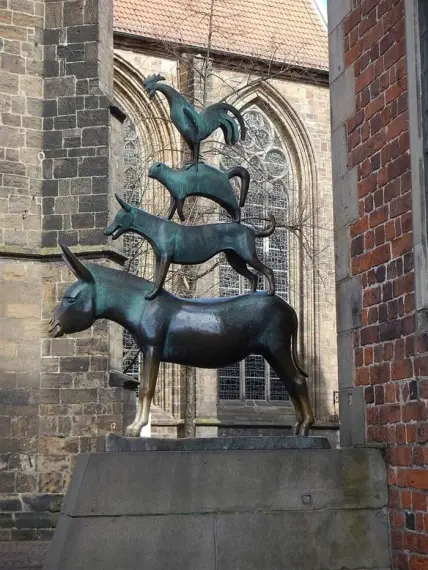
Bremen, or Bremen, is located in northern Germany and is the capital of the smallest state of the same name. It has a population of just over half a million and is a major industrial center. Because of its large harbor, Bremen-Bremerhaven is sometimes associated as a city by the sea, but it is as far as 60 kilometers from the North Sea coast. Instead, it boasts an inland port on the Weser River.
It is a Hanseatic city full of monuments and rich history, dating back to the 8th century, when Charlemagne established a bishopric here. Bremen is a city good for sightseeing on your own feet - most of the monuments are located in the very center. While there, it's worth seeing the UNESCO-listed Town Hall and the Roland Monument from 1404. Also worth a visit is the Gothic St. Peter's Cathedral, a stroll through the Schnoor district, or the charming Böttcherstrasse.
Moving away from the strict center, in the Wallanlagen Park you can see a historic windmill from the late 19th century. It's a good place to relax, enjoy a cup of coffee or a meal there. Bremen has many beautiful recreational areas amidst the greenery. Especially noteworthy is the Bürgerpark - the largest green area in the city.
Many people associate Bremen with the characters of the Grimm brothers' fairy tale - the musicians of Bremen, namely the donkey, the dog, the cat and the rooster. In the center of the city, right next to the city hall, you can find a statue of them, in addition to gadgets and souvenirs with images of the clever animals are available in many stores. The city is also famous for its beer, the world's largest wine collection and delicious coffee. It is also the third urban center after Amsterdam and Copenhagen to be so bike-friendly.
Getting to Bremen - car, train, or bus to Bremen?
Bremen is a city in northern Germany well connected to the rest of the country. Bremen International Airport is located in the Neustadt district. From the main Bremen Hauptbahnhof train station, you can walk to the city's main square in about 10 minutes, and the bus station is located adjacent to the train station. You can check out convenient buses to Bremen and buses from Bremen to Poland or Ukraine on our website. So it's worth planning an interesting trip and choosing our bus to Bremen. This charming city is full of surprises and rich history.
Bremen, or Bremen, is located in northern Germany and is the capital of the smallest state of the same name. It has a population of just over half a million and is a major industrial center. Because of its large harbor, Bremen-Bremerhaven is sometimes associated as a city by the sea, but it is as far as 60 kilometers from the North Sea coast. Instead, it boasts an inland port on the Weser River.
It is a Hanseatic city full of monuments and rich history, dating back to the 8th century, when Charlemagne established a bishopric here. Bremen is a city good for sightseeing on your own feet - most of the monuments are located in the very center. While there, it's worth seeing the UNESCO-listed Town Hall and the Roland Monument from 1404. Also worth a visit is the Gothic St. Peter's Cathedral, a stroll through the Schnoor district, or the charming Böttcherstrasse.
Moving away from the strict center, in the Wallanlagen Park you can see a historic windmill from the late 19th century. It's a good place to relax, enjoy a cup of coffee or a meal there. Bremen has many beautiful recreational areas amidst the greenery. Especially noteworthy is the Bürgerpark - the largest green area in the city.
Many people associate Bremen with the characters of the Grimm brothers' fairy tale - the musicians of Bremen, namely the donkey, the dog, the cat and the rooster. In the center of the city, right next to the city hall, you can find a statue of them, in addition to gadgets and souvenirs with images of the clever animals are available in many stores. The city is also famous for its beer, the world's largest wine collection and delicious coffee. It is also the third urban center after Amsterdam and Copenhagen to be so bike-friendly.
Getting to Bremen - car, train, or bus to Bremen?
Bremen is a city in northern Germany well connected to the rest of the country. Bremen International Airport is located in the Neustadt district. From the main Bremen Hauptbahnhof train station, you can walk to the city's main square in about 10 minutes, and the bus station is located adjacent to the train station. You can check out convenient buses to Bremen and buses from Bremen to Poland or Ukraine on our website. So it's worth planning an interesting trip and choosing our bus to Bremen. This charming city is full of surprises and rich history.







© 2026 Sindbad
Technical support, assistance, payments: Sindbad IT
© 2026 Sindbad
Technical support, assistance, payments: Sindbad IT