
Bus KROTOSZYN - KARLSRUHE. Order a ticket
KROTOSZYN
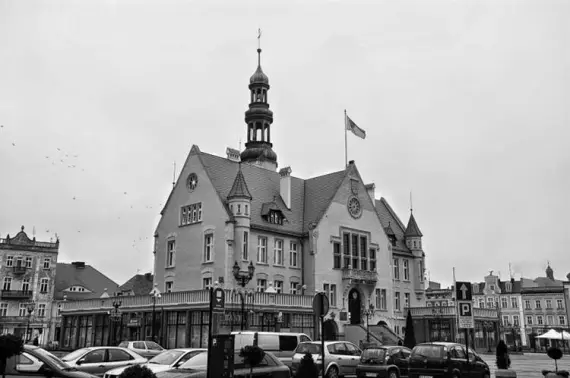
Krotoszyn is a town of nearly 29,000 people located in Greater Poland province on the Kaliska Plateau. It is located between Wrocław and Poznań, near Ostrów Wielkopolski, and is more than 600 years old. It was then that Krotoszyn was located under the Magdeburg Law thanks to King Wladyslaw Jagiello. It owes its name to the Krotowski family, who owned the city area in the 15th century.
Over the centuries Krotoszyn was repeatedly destroyed by various invasions or fires, but was rebuilt quite quickly, so that it did not lose too much of its importance and historical urban layout. In recent centuries, crafts (mainly shoemaking and tanning) and agriculture developed rapidly there.
While in Krotoszyn, it's worth seeing the market square with its historic townhouses and town hall from the late 17th century, as well as numerous churches, especially wooden ones - the church of St. Mary Magdalene from 1755 or St. Fabian and St. Sebastian from 1572, which looks like an Orthodox church. The city also has a charming park named after the Polish Army with a long history. In addition, it is surrounded by numerous forest complexes called Dąbrowa Krotoszynskie, where several scenic biking and hiking trails have been laid out.
Getting there - Krotoszyn
Krotoszyn is well connected with the rest of the country. National and provincial roads run through it. There is a train station and a bus station with daily connections to major cities and neighboring towns in Greater Poland. From the PKS Krotoszyn station you can also go to many European cities, mainly located in Germany, France, England or Italy.
Krotoszyn is a town of nearly 29,000 people located in Greater Poland province on the Kaliska Plateau. It is located between Wrocław and Poznań, near Ostrów Wielkopolski, and is more than 600 years old. It was then that Krotoszyn was located under the Magdeburg Law thanks to King Wladyslaw Jagiello. It owes its name to the Krotowski family, who owned the city area in the 15th century.
Over the centuries Krotoszyn was repeatedly destroyed by various invasions or fires, but was rebuilt quite quickly, so that it did not lose too much of its importance and historical urban layout. In recent centuries, crafts (mainly shoemaking and tanning) and agriculture developed rapidly there.
While in Krotoszyn, it's worth seeing the market square with its historic townhouses and town hall from the late 17th century, as well as numerous churches, especially wooden ones - the church of St. Mary Magdalene from 1755 or St. Fabian and St. Sebastian from 1572, which looks like an Orthodox church. The city also has a charming park named after the Polish Army with a long history. In addition, it is surrounded by numerous forest complexes called Dąbrowa Krotoszynskie, where several scenic biking and hiking trails have been laid out.
Getting there - Krotoszyn
Krotoszyn is well connected with the rest of the country. National and provincial roads run through it. There is a train station and a bus station with daily connections to major cities and neighboring towns in Greater Poland. From the PKS Krotoszyn station you can also go to many European cities, mainly located in Germany, France, England or Italy.
KARLSRUHE
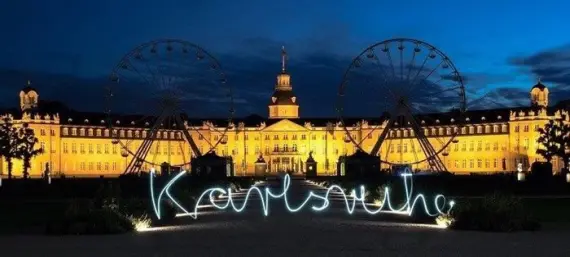
Karlsruhe is a city in Baden-Württemberg in southwestern Germany. It lies in the Upper Rhine Plain, on the Rhine, Alb and Pfinz rivers. It was founded in 1715 by the Margrave of Baden, Karl Wilhelm von Baden-Durlach. What undoubtedly distinguishes the city is its layout in the classic star-shaped layout. At the center is the palace, from which 32 avenues descend radially.
Already in the 19th century Karlsruhe was an important European scientific center. Research on electromagnetic waves was conducted there by Heinrich Hertz, and Karl Drais constructed the first bicycle in 1817. The city is home to Germany's oldest technical university.
What to see in Karlsruhe?
One of the most important sights in the city is the Renaissance palace located in the center. Its interiors now house the Baden State Museum with collections on the region and Karlsruhe itself. This castle is surrounded by an extensive park with a botanical garden and other thematic gardens, where you can have a nice rest amidst the greenery. Another museum worth visiting is the Staatliche Kunsthalle Karlsruhe, with a valuable collection of paintings by such famous artists as Rembrandt, Dürer and Cézanne, among others.
Getting there and transportation - Karlsruhe
The city is well connected - important highways such as the A5, A8 and A65 pass close by, and the French border is only about twenty kilometers away. Karlsruhe's location on the Rhine makes the city an important inland port, the fourth largest in Germany.
The city is also a major rail hub with a freight station where numerous lines converge, including those from Heidelberg to Basel and Mannheim to Rastatt. The Karlsruhe bus station is located near the city's main train station - Karlsruhe Hauptbahnhof on Schwarzwaldstrsse. Sindbad offers numerous buses to Karlsruhe - an affordable and environmentally friendly option for getting to this German city.
Karlsruhe is a city in Baden-Württemberg in southwestern Germany. It lies in the Upper Rhine Plain, on the Rhine, Alb and Pfinz rivers. It was founded in 1715 by the Margrave of Baden, Karl Wilhelm von Baden-Durlach. What undoubtedly distinguishes the city is its layout in the classic star-shaped layout. At the center is the palace, from which 32 avenues descend radially.
Already in the 19th century Karlsruhe was an important European scientific center. Research on electromagnetic waves was conducted there by Heinrich Hertz, and Karl Drais constructed the first bicycle in 1817. The city is home to Germany's oldest technical university.
What to see in Karlsruhe?
One of the most important sights in the city is the Renaissance palace located in the center. Its interiors now house the Baden State Museum with collections on the region and Karlsruhe itself. This castle is surrounded by an extensive park with a botanical garden and other thematic gardens, where you can have a nice rest amidst the greenery. Another museum worth visiting is the Staatliche Kunsthalle Karlsruhe, with a valuable collection of paintings by such famous artists as Rembrandt, Dürer and Cézanne, among others.
Getting there and transportation - Karlsruhe
The city is well connected - important highways such as the A5, A8 and A65 pass close by, and the French border is only about twenty kilometers away. Karlsruhe's location on the Rhine makes the city an important inland port, the fourth largest in Germany.
The city is also a major rail hub with a freight station where numerous lines converge, including those from Heidelberg to Basel and Mannheim to Rastatt. The Karlsruhe bus station is located near the city's main train station - Karlsruhe Hauptbahnhof on Schwarzwaldstrsse. Sindbad offers numerous buses to Karlsruhe - an affordable and environmentally friendly option for getting to this German city.







© 2026 Sindbad
Technical support, assistance, payments: Sindbad IT
© 2026 Sindbad
Technical support, assistance, payments: Sindbad IT