
Coach KROTOSZYN - SCHLESWIG - find a connection and buy a ticket
KROTOSZYN
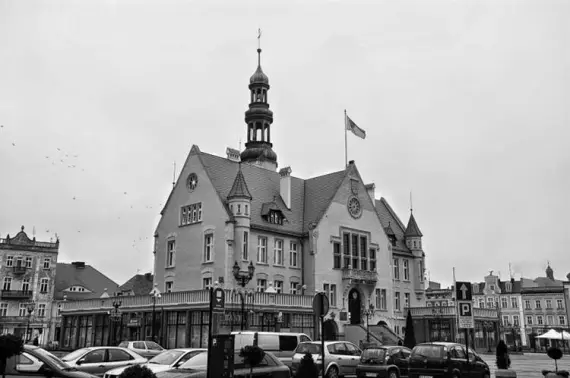
Krotoszyn is a town of nearly 29,000 people located in Greater Poland province on the Kaliska Plateau. It is located between Wrocław and Poznań, near Ostrów Wielkopolski, and is more than 600 years old. It was then that Krotoszyn was located under the Magdeburg Law thanks to King Wladyslaw Jagiello. It owes its name to the Krotowski family, who owned the city area in the 15th century.
Over the centuries Krotoszyn was repeatedly destroyed by various invasions or fires, but was rebuilt quite quickly, so that it did not lose too much of its importance and historical urban layout. In recent centuries, crafts (mainly shoemaking and tanning) and agriculture developed rapidly there.
While in Krotoszyn, it's worth seeing the market square with its historic townhouses and town hall from the late 17th century, as well as numerous churches, especially wooden ones - the church of St. Mary Magdalene from 1755 or St. Fabian and St. Sebastian from 1572, which looks like an Orthodox church. The city also has a charming park named after the Polish Army with a long history. In addition, it is surrounded by numerous forest complexes called Dąbrowa Krotoszynskie, where several scenic biking and hiking trails have been laid out.
Getting there - Krotoszyn
Krotoszyn is well connected with the rest of the country. National and provincial roads run through it. There is a train station and a bus station with daily connections to major cities and neighboring towns in Greater Poland. From the PKS Krotoszyn station you can also go to many European cities, mainly located in Germany, France, England or Italy.
Krotoszyn is a town of nearly 29,000 people located in Greater Poland province on the Kaliska Plateau. It is located between Wrocław and Poznań, near Ostrów Wielkopolski, and is more than 600 years old. It was then that Krotoszyn was located under the Magdeburg Law thanks to King Wladyslaw Jagiello. It owes its name to the Krotowski family, who owned the city area in the 15th century.
Over the centuries Krotoszyn was repeatedly destroyed by various invasions or fires, but was rebuilt quite quickly, so that it did not lose too much of its importance and historical urban layout. In recent centuries, crafts (mainly shoemaking and tanning) and agriculture developed rapidly there.
While in Krotoszyn, it's worth seeing the market square with its historic townhouses and town hall from the late 17th century, as well as numerous churches, especially wooden ones - the church of St. Mary Magdalene from 1755 or St. Fabian and St. Sebastian from 1572, which looks like an Orthodox church. The city also has a charming park named after the Polish Army with a long history. In addition, it is surrounded by numerous forest complexes called Dąbrowa Krotoszynskie, where several scenic biking and hiking trails have been laid out.
Getting there - Krotoszyn
Krotoszyn is well connected with the rest of the country. National and provincial roads run through it. There is a train station and a bus station with daily connections to major cities and neighboring towns in Greater Poland. From the PKS Krotoszyn station you can also go to many European cities, mainly located in Germany, France, England or Italy.
SCHLESWIG
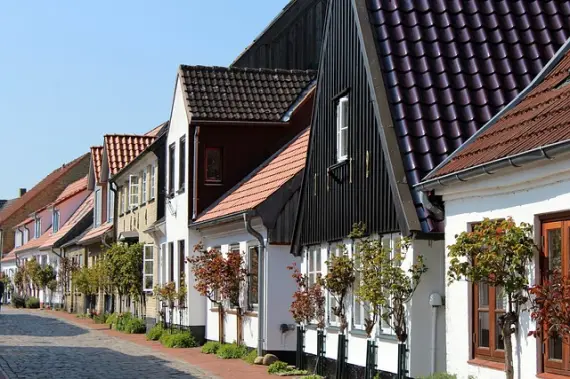
Schleswig is a city in northern Germany, near the border with Denmark. It lies in the state of Schleswig-Holstein on the Schlei Bay. What to see in Schleswig? The largest monument here is the Romanesque-Gothic St. Peter's Cathedral, where Danish kings rest within its walls. Also worth seeing here is Gottorf Castle, the former seat of the local bishops as well as the Danish kings and the Dukes of Holstein. Its interiors are home to several museums here, including the Museum of Art and Cultural History with paintings, sculptures and other historically valuable objects. When visiting Schleswig, take a walk to the fishing district of Holm, located near the old town, which is extremely charming and atmospheric. For lovers of medieval history, the Haithabu Viking Museum in Hedeby, located on the site of a former settlement of these warriors, may be a treat. It features reconstructions of various buildings and quite a few objects found on excavations carried out in the area. While in Schleswig, it is also worth taking a cruise on the bay, or walking along the surrounding hiking trails.
Getting to Schleswig
Schleswig is located in northern Germany, on the Bay of Kiel. Slightly west of the city runs the A7 highway, part of the E45 European route. Schleswig's main train station is located near the castle and the town's museum, right next to an extensive park. Our coaches, on the other hand, stop right in the city center, at the ZOB central bus station located next to St. Peter's Cathedral.
If you want to get to know Germany better and visit the northernmost state of the union, don't wait, find a convenient Schleswig bus for you today! We invite you to take advantage of our offer.
Schleswig is a city in northern Germany, near the border with Denmark. It lies in the state of Schleswig-Holstein on the Schlei Bay. What to see in Schleswig? The largest monument here is the Romanesque-Gothic St. Peter's Cathedral, where Danish kings rest within its walls. Also worth seeing here is Gottorf Castle, the former seat of the local bishops as well as the Danish kings and the Dukes of Holstein. Its interiors are home to several museums here, including the Museum of Art and Cultural History with paintings, sculptures and other historically valuable objects. When visiting Schleswig, take a walk to the fishing district of Holm, located near the old town, which is extremely charming and atmospheric. For lovers of medieval history, the Haithabu Viking Museum in Hedeby, located on the site of a former settlement of these warriors, may be a treat. It features reconstructions of various buildings and quite a few objects found on excavations carried out in the area. While in Schleswig, it is also worth taking a cruise on the bay, or walking along the surrounding hiking trails.
Getting to Schleswig
Schleswig is located in northern Germany, on the Bay of Kiel. Slightly west of the city runs the A7 highway, part of the E45 European route. Schleswig's main train station is located near the castle and the town's museum, right next to an extensive park. Our coaches, on the other hand, stop right in the city center, at the ZOB central bus station located next to St. Peter's Cathedral.
If you want to get to know Germany better and visit the northernmost state of the union, don't wait, find a convenient Schleswig bus for you today! We invite you to take advantage of our offer.







© 2026 Sindbad
Technical support, assistance, payments: Sindbad IT
© 2026 Sindbad
Technical support, assistance, payments: Sindbad IT