
Bus KROTOSZYN - STRASBOURG - Sindbad
KROTOSZYN
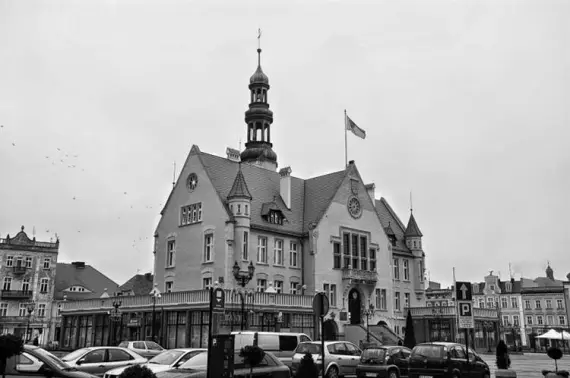
Krotoszyn is a town of nearly 29,000 people located in Greater Poland province on the Kaliska Plateau. It is located between Wrocław and Poznań, near Ostrów Wielkopolski, and is more than 600 years old. It was then that Krotoszyn was located under the Magdeburg Law thanks to King Wladyslaw Jagiello. It owes its name to the Krotowski family, who owned the city area in the 15th century.
Over the centuries Krotoszyn was repeatedly destroyed by various invasions or fires, but was rebuilt quite quickly, so that it did not lose too much of its importance and historical urban layout. In recent centuries, crafts (mainly shoemaking and tanning) and agriculture developed rapidly there.
While in Krotoszyn, it's worth seeing the market square with its historic townhouses and town hall from the late 17th century, as well as numerous churches, especially wooden ones - the church of St. Mary Magdalene from 1755 or St. Fabian and St. Sebastian from 1572, which looks like an Orthodox church. The city also has a charming park named after the Polish Army with a long history. In addition, it is surrounded by numerous forest complexes called Dąbrowa Krotoszynskie, where several scenic biking and hiking trails have been laid out.
Getting there - Krotoszyn
Krotoszyn is well connected with the rest of the country. National and provincial roads run through it. There is a train station and a bus station with daily connections to major cities and neighboring towns in Greater Poland. From the PKS Krotoszyn station you can also go to many European cities, mainly located in Germany, France, England or Italy.
Krotoszyn is a town of nearly 29,000 people located in Greater Poland province on the Kaliska Plateau. It is located between Wrocław and Poznań, near Ostrów Wielkopolski, and is more than 600 years old. It was then that Krotoszyn was located under the Magdeburg Law thanks to King Wladyslaw Jagiello. It owes its name to the Krotowski family, who owned the city area in the 15th century.
Over the centuries Krotoszyn was repeatedly destroyed by various invasions or fires, but was rebuilt quite quickly, so that it did not lose too much of its importance and historical urban layout. In recent centuries, crafts (mainly shoemaking and tanning) and agriculture developed rapidly there.
While in Krotoszyn, it's worth seeing the market square with its historic townhouses and town hall from the late 17th century, as well as numerous churches, especially wooden ones - the church of St. Mary Magdalene from 1755 or St. Fabian and St. Sebastian from 1572, which looks like an Orthodox church. The city also has a charming park named after the Polish Army with a long history. In addition, it is surrounded by numerous forest complexes called Dąbrowa Krotoszynskie, where several scenic biking and hiking trails have been laid out.
Getting there - Krotoszyn
Krotoszyn is well connected with the rest of the country. National and provincial roads run through it. There is a train station and a bus station with daily connections to major cities and neighboring towns in Greater Poland. From the PKS Krotoszyn station you can also go to many European cities, mainly located in Germany, France, England or Italy.
STRASBOURG
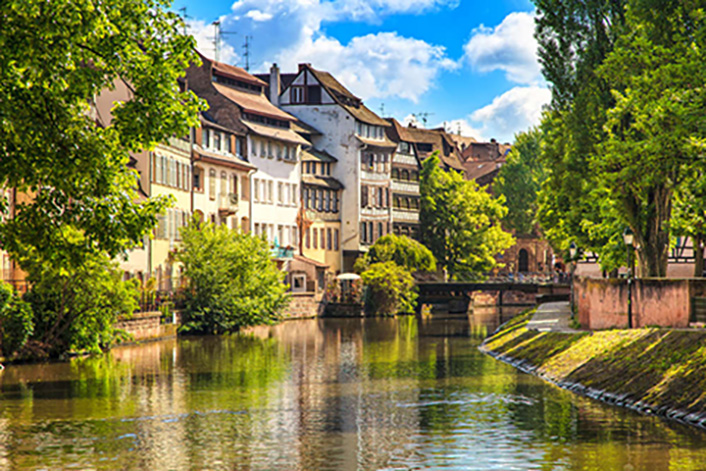
Strasbourg is an important point on the map of Europe, both today and in the past. This particular town was actually fought over from the beginning. Until the twelfth year of our era, the town was ruled by the Gauls, but then it was forcibly captured by Roman legionaries. They erected a fort there for crossing the Rhine. For the next five centuries the Roman Empire successfully defended itself against barbarian attacks. However, in the year five hundred they succumbed to the Germanic tribes, who, alongside the Asiatic Huns, captured the fort and renamed it from Argentoratum, a name they did not understand, to Stratœburgus, a town on the beaten road.
From then on, the city was ruled by the Franks. Or at least until the end of the seventeenth century. Then Louis XIV annexed Strasbourg to the Kingdom of France. Of course, this was not the end of the struggle for this particular locality.
Proof can be found in the rivalry between Strasbourg and the German city of Kehl, which competed for supremacy in the region. It was only years later that cooperation was established and a bridge was erected between the cities. And it existed as a symbol of cooperation until World War II. And once the rumblings of the cannons ceased, it was erected anew, with European funds and the involvement of both sides. Since then, the bridge over the ren has been used to move tens of thousands of cars a day!
By bus to Strasbourg!
One of the best ways to get to Strasbourg, of course, in our opinion, is by bus. Our buses to Strasbourg stop at Place de l "Etoile. It's actually the very center, so leaving the deck of our bus in a quarter of an hour you can find yourself in the old town, admire the Notre Dame Cathedral and taste the local delicacies. And Strasbourg is famous for its amazing cuisine.
Strasbourg is an important point on the map of Europe, both today and in the past. This particular town was actually fought over from the beginning. Until the twelfth year of our era, the town was ruled by the Gauls, but then it was forcibly captured by Roman legionaries. They erected a fort there for crossing the Rhine. For the next five centuries the Roman Empire successfully defended itself against barbarian attacks. However, in the year five hundred they succumbed to the Germanic tribes, who, alongside the Asiatic Huns, captured the fort and renamed it from Argentoratum, a name they did not understand, to Stratœburgus, a town on the beaten road.
From then on, the city was ruled by the Franks. Or at least until the end of the seventeenth century. Then Louis XIV annexed Strasbourg to the Kingdom of France. Of course, this was not the end of the struggle for this particular locality.
Proof can be found in the rivalry between Strasbourg and the German city of Kehl, which competed for supremacy in the region. It was only years later that cooperation was established and a bridge was erected between the cities. And it existed as a symbol of cooperation until World War II. And once the rumblings of the cannons ceased, it was erected anew, with European funds and the involvement of both sides. Since then, the bridge over the ren has been used to move tens of thousands of cars a day!
By bus to Strasbourg!
One of the best ways to get to Strasbourg, of course, in our opinion, is by bus. Our buses to Strasbourg stop at Place de l "Etoile. It's actually the very center, so leaving the deck of our bus in a quarter of an hour you can find yourself in the old town, admire the Notre Dame Cathedral and taste the local delicacies. And Strasbourg is famous for its amazing cuisine.







© 2026 Sindbad
Technical support, assistance, payments: Sindbad IT
© 2026 Sindbad
Technical support, assistance, payments: Sindbad IT