
Bus from ULM to KROTOSZYN. Current connections
ULM
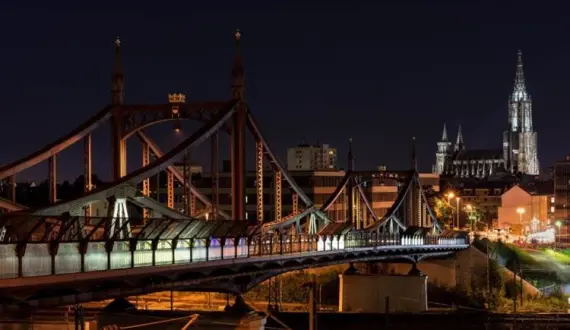
Ulm is a city on the Danube River in the German state of Baden-Württemberg in the south of the country. It has a long history - in sources the name "Ulma" appears as early as 856, and Ulm has had city rights since 1181. Walking around the city, one can see a successful mix of historical buildings and modern, also very futuristic buildings.
The largest monument here is the Gothic cathedral, famous for having the world's tallest tower. From it you can enjoy views of the immediate and somewhat distant environs of Ulm. Attractions in the city include the Fischerviertel - the Fishermen's Quarter stretching along the banks of the Danube. Here you can stroll along narrow, cobblestone streets amid charming little houses. One of them, known as Schiefes Haus, or the late Gothic "crooked house," is deflected from the vertical by about 10° due to the rather sodden ground. Ulm offers a large number of cultural events with the most famous one, the Danube Festival, at the top, many theaters, art galleries and interesting museums like the Bread and Art Museum. While you're here, be sure to stop by Germany's largest botanical garden, run by the University of Ulm. It covers an area of 28 hectares and showcases vegetation from all of Earth's climatic zones. Friedrichsau Park, with its small lakes and picnic areas, will also be a good place for a stroll in the city.
Getting to Ulm - bus, plane, car or train?
Ulm is included in a low-emission zone, which means you need an environmental sticker from all vehicles entering the city. The international airports closest to it are in Stuttgart and Munich. Ulm's main train station is located near the old town. Our coaches stop at the bus station in the Böfingen district. If you are interested in the sights and attractions of Ulm, don't wait to plan your trip with us!
Ulm is a city on the Danube River in the German state of Baden-Württemberg in the south of the country. It has a long history - in sources the name "Ulma" appears as early as 856, and Ulm has had city rights since 1181. Walking around the city, one can see a successful mix of historical buildings and modern, also very futuristic buildings.
The largest monument here is the Gothic cathedral, famous for having the world's tallest tower. From it you can enjoy views of the immediate and somewhat distant environs of Ulm. Attractions in the city include the Fischerviertel - the Fishermen's Quarter stretching along the banks of the Danube. Here you can stroll along narrow, cobblestone streets amid charming little houses. One of them, known as Schiefes Haus, or the late Gothic "crooked house," is deflected from the vertical by about 10° due to the rather sodden ground. Ulm offers a large number of cultural events with the most famous one, the Danube Festival, at the top, many theaters, art galleries and interesting museums like the Bread and Art Museum. While you're here, be sure to stop by Germany's largest botanical garden, run by the University of Ulm. It covers an area of 28 hectares and showcases vegetation from all of Earth's climatic zones. Friedrichsau Park, with its small lakes and picnic areas, will also be a good place for a stroll in the city.
Getting to Ulm - bus, plane, car or train?
Ulm is included in a low-emission zone, which means you need an environmental sticker from all vehicles entering the city. The international airports closest to it are in Stuttgart and Munich. Ulm's main train station is located near the old town. Our coaches stop at the bus station in the Böfingen district. If you are interested in the sights and attractions of Ulm, don't wait to plan your trip with us!
KROTOSZYN
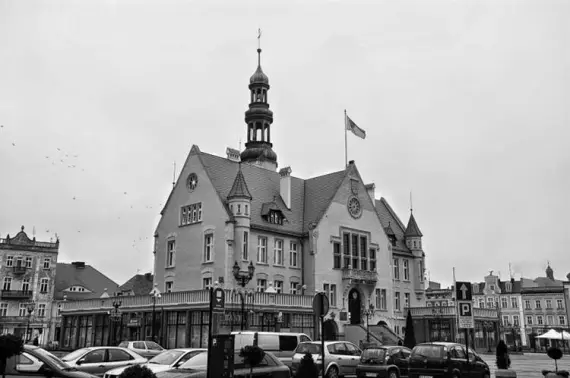
Krotoszyn is a town of nearly 29,000 people located in Greater Poland province on the Kaliska Plateau. It is located between Wrocław and Poznań, near Ostrów Wielkopolski, and is more than 600 years old. It was then that Krotoszyn was located under the Magdeburg Law thanks to King Wladyslaw Jagiello. It owes its name to the Krotowski family, who owned the city area in the 15th century.
Over the centuries Krotoszyn was repeatedly destroyed by various invasions or fires, but was rebuilt quite quickly, so that it did not lose too much of its importance and historical urban layout. In recent centuries, crafts (mainly shoemaking and tanning) and agriculture developed rapidly there.
While in Krotoszyn, it's worth seeing the market square with its historic townhouses and town hall from the late 17th century, as well as numerous churches, especially wooden ones - the church of St. Mary Magdalene from 1755 or St. Fabian and St. Sebastian from 1572, which looks like an Orthodox church. The city also has a charming park named after the Polish Army with a long history. In addition, it is surrounded by numerous forest complexes called Dąbrowa Krotoszynskie, where several scenic biking and hiking trails have been laid out.
Getting there - Krotoszyn
Krotoszyn is well connected with the rest of the country. National and provincial roads run through it. There is a train station and a bus station with daily connections to major cities and neighboring towns in Greater Poland. From the PKS Krotoszyn station you can also go to many European cities, mainly located in Germany, France, England or Italy.
Krotoszyn is a town of nearly 29,000 people located in Greater Poland province on the Kaliska Plateau. It is located between Wrocław and Poznań, near Ostrów Wielkopolski, and is more than 600 years old. It was then that Krotoszyn was located under the Magdeburg Law thanks to King Wladyslaw Jagiello. It owes its name to the Krotowski family, who owned the city area in the 15th century.
Over the centuries Krotoszyn was repeatedly destroyed by various invasions or fires, but was rebuilt quite quickly, so that it did not lose too much of its importance and historical urban layout. In recent centuries, crafts (mainly shoemaking and tanning) and agriculture developed rapidly there.
While in Krotoszyn, it's worth seeing the market square with its historic townhouses and town hall from the late 17th century, as well as numerous churches, especially wooden ones - the church of St. Mary Magdalene from 1755 or St. Fabian and St. Sebastian from 1572, which looks like an Orthodox church. The city also has a charming park named after the Polish Army with a long history. In addition, it is surrounded by numerous forest complexes called Dąbrowa Krotoszynskie, where several scenic biking and hiking trails have been laid out.
Getting there - Krotoszyn
Krotoszyn is well connected with the rest of the country. National and provincial roads run through it. There is a train station and a bus station with daily connections to major cities and neighboring towns in Greater Poland. From the PKS Krotoszyn station you can also go to many European cities, mainly located in Germany, France, England or Italy.







© 2026 Sindbad
Technical support, assistance, payments: Sindbad IT
© 2026 Sindbad
Technical support, assistance, payments: Sindbad IT